
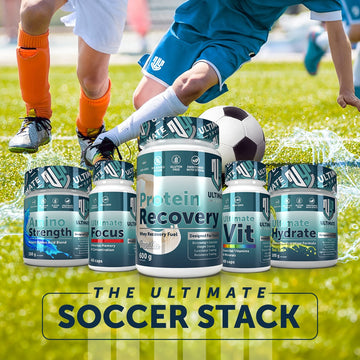

Most supplements on the shelf are built for adults. That's the problem. Your young athlete's body doesn't process nutrients the way a grown adult's does, and a generic buying guide won't tell you that. What you need is a way to filter for safety first, before you even look at marketing claims.
This guide walks through the concrete factors that decide whether a product supports your child's health or works against it.
Why Youth Supplements Require a Different Safety Standard
Children are not miniature adults. Their bodies metabolize nutrients differently, and they have a lower tolerance for contaminants or excess nutrient loads than a fully matured system does. Even minor impurities can build up or disrupt hormonal balance during a growth window, which is why safe sports nutrition for children needs stricter purity thresholds than general adult wellness products.
Youth athletes have distinct metabolic rates and developmental needs. That's what makes adult-formulated supplements potentially unsafe, or simply ineffective, for a child's biology.
Standard adult supplements are often dosed for an 80kg adult male. Give that to a 45kg adolescent and you can overwhelm their renal clearance capacity. Choosing supplements for kids' sport means checking that a formula was built for youth metabolism from the start, not scaled down from an adult template. Look for products whose safety testing accounts for pediatric absorption rates and excretion limits specifically.
Prioritizing FSSC Certified Kids Supplements Over Generic Brands
Certification is the one objective safety measure in an industry full of marketing claims. FSSC certified kids supplements give you proof that a facility follows an internationally recognized food safety management system, rather than asking you to trust a self-reported quality claim. When you're comparing brands, this certification is the first filter: it separates real manufacturers from unverified contract packers who might cut corners on testing.
Understanding Food Safety System Certification
FSSC 22000 certification requires a full hazard analysis and critical control point validation specific to food safety management. In practice, that means every batch gets checked systematically for biological, chemical, and physical hazards before it reaches a shelf. For a parent trying to work out what to look for in kids' sports supplements, this certification tells you the manufacturer has documented, audited processes for preventing contamination. It's not just a final test on the finished product.
Why Manufacturing Standards Matter for Youth
A smaller body mass makes young athletes more vulnerable to manufacturing inconsistencies, because any deviation in potency or purity has a bigger relative effect. A facility without solid hazard controls might turn out batches with uneven nutrient distribution or trace heavy metals, levels that would barely register for an adult but matter for a child. Third-party auditing of manufacturing standards is what gives you that assurance. A brand's own promises can't.
Identifying Age-Appropriate Dosing in Sports Nutrition
Dosage is where good intentions most often go wrong. An adult-sized serving can overwhelm a young metabolic system and cause nutrient imbalances that hurt performance instead of helping it. Choosing a supplement for your child athlete means accepting that more isn't better when the enzymatic pathways doing the processing are still maturing.
Risks of Adult-Sized Servings
Push past the appropriate intake level and a child's liver and kidneys have to work harder to clear the excess, pulling energy away from growth and recovery. High doses of certain vitamins and minerals can also compete for absorption, where too much of one nutrient blocks the uptake of another. These deficiencies rarely cause symptoms right away, but they can chip away at bone density or immune function over a full competitive season.
Matching Intake to Developmental Stage
Age-appropriate dosing for youth athletes isn't just standard adult amounts scaled by age. It accounts for lean body mass, training volume, and pubertal stage. Weigh label claims against your child's actual training load and physical maturity, and look for formulas that scale nutrient delivery to real metabolic demand. Products built for youth typically set serving sizes around pediatric dietary reference intakes, with some flexibility for heavier training days.
Evaluating Ingredient Transparency and Label Accuracy
Proprietary blends hide individual ingredient amounts behind a vague collective term. That makes it impossible to know whether a product's doses are effective, or even safe. Ingredient transparency matters in sports nutrition for kids because you can't judge the risk without knowing exactly what's in each serving. A brand that won't disclose its full formula is asking you to trust its marketing instead of its science.
Transparent labeling is a non-negotiable marker of quality in safe sports nutrition for children.
Scan a supplement facts panel and every active ingredient should list an exact milligram amount along with its chemical form. That's what lets you check dosages against pediatric safety guidelines and confirm there's no hidden stimulant or filler in the formula. If a product uses a proprietary blend instead of breaking out individual components, walk away, no matter how good the front-of-pack claims sound.
Targeted Hydration Support for Active Youth
Hydration for young athletes is about more than replacing fluid during intense activity. Electrolyte balance keeps neuromuscular function steady and helps prevent cramping, but plenty of commercial sports drinks lean on sugar instead of functional nutrition. Targeted electrolytes support hydration by replenishing the sodium, potassium, and magnesium lost through sweat, without spiking blood glucose along the way.
Electrolyte Balance Without Excess Sugar
Too much sugar in a hydration product can actually slow fluid absorption and contribute to an energy crash mid-competition. A well-built youth hydration formula focuses on mineral ratios that support fast gastric emptying and cellular uptake on their own, without leaning on carbohydrate transport. What you want is something that addresses the electrolyte losses specific to youth sport, without adding calories your child doesn't need for a shorter session.
When to Use Ultimate Hydrate
Ultimate Hydrate combines sodium, potassium, magnesium, and vitamin C in a formula built to prevent cramping in active kids. It comes in Juicy Peach and Sour Kiwi, and it's priced around ZAR 200–289 (subject to change). You can check the Ultimate Hydrate formula to see how its nutrient profile lines up with your child's sweat rate and training intensity.

For broader context on fluid management, the detailed hydration strategies for young athletes resource covers timing and environmental factors that go alongside supplementation.
Aligning Supplementation with Specific Sporting Demands
Supplement needs shift a lot between endurance, team, and skill-based sports. There's no single template. A young swimmer logging high-volume aerobic sessions faces different nutritional stress than a cricket player who needs explosive power and sustained concentration. Match the product to the actual physical demand, and you address a real performance bottleneck instead of a theoretical one.
Endurance athletes generally do best with sustained-release hydration and glycogen-supportive nutrition. Field sport players often need faster recovery and joint support instead. Skill-based sports put the premium on cognitive focus and reaction time, where stable blood sugar and solid micronutrient status matter more than raw calories. Match supplementation to your child's primary energy system and recovery timeline, not a generic athletic stack.
The recovery nutrition basics resource can help you work out which post-exercise windows matter most for your child's sport and schedule.
Verifying Quality Through Guarantees and Local Support
Reading labels and checking certifications only tells part of the story. Verifying a brand's reliability also means looking at its service-level commitments, not just its front label. A company confident in its own manufacturing backs that confidence with a real guarantee, one that reduces your risk, financial and otherwise.
Ultimate Youth makes all its products in an FSSC 22000 certified facility and offers a 7-day money-back guarantee. That guarantee is the company standing behind the safety and efficacy of its formulas, and it gives you room to test whether a product actually suits your child without committing outright. Add free shipping on orders over R1500 and local South African customer support, and the safety verification runs from the factory floor to your doorstep.
The comprehensive parent's guide to supplement safety goes deeper on these verification steps, with more frameworks to use as your child's training evolves.


